




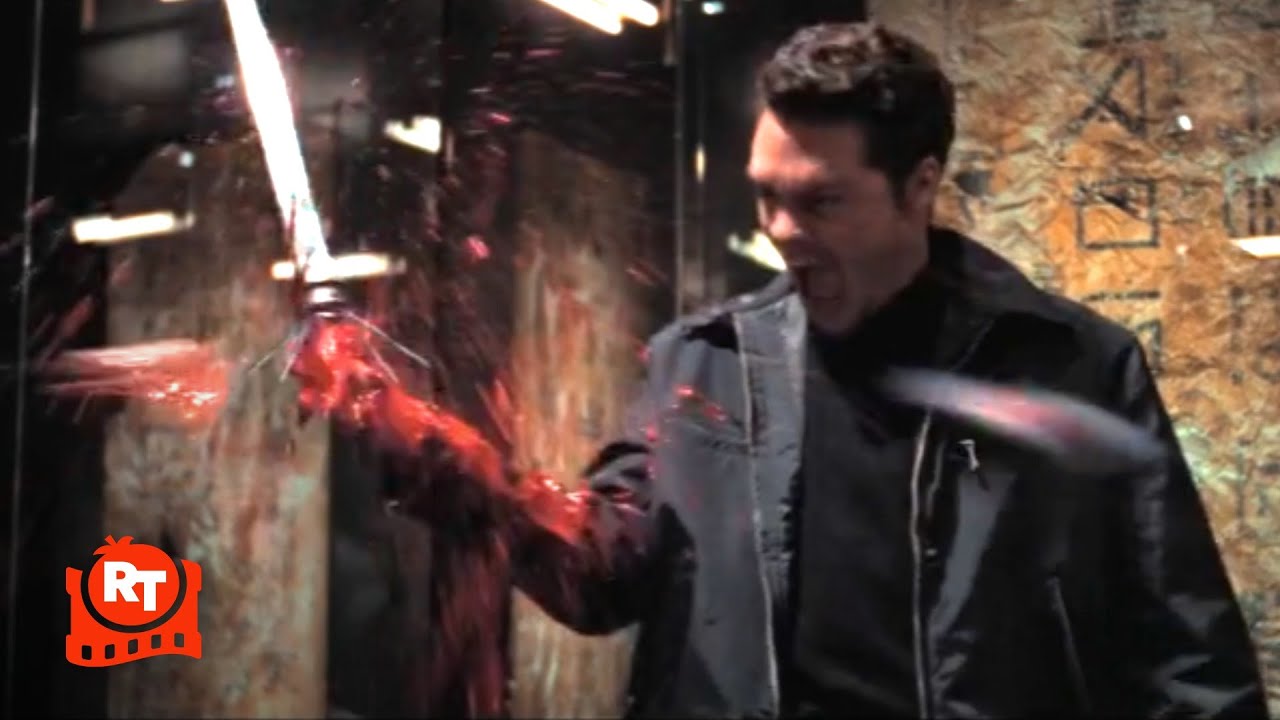
An Opening Cut That Changed the Genre
Before superhero movies became carefully branded experiences, before shared universes and teaser-driven fandoms, there was Blade (1998). It arrived without fanfare and left with authority. Directed by Stephen Norrington and carried by the formidable presence of Wesley Snipes, the film did not ask audiences to believe in superheroes. It assumed they already did. That confidence became its sharpest weapon.

At the time, Hollywood treated comic book adaptations with skepticism. They were considered niche, risky, or worse, faintly embarrassing. Blade rejected that anxiety. It walked into the room dressed in black leather, armed with techno beats and martial precision, and dared the genre to keep up.

Wesley Snipes as Blade: Performance as Declaration
Snipes does not play Blade so much as embody him. His performance is restrained, controlled, and deliberate. This is not a hero driven by speeches or self-doubt. Blade speaks when necessary, fights when required, and listens to no one who has not earned his respect. In lesser hands, such minimalism might read as flat. In Snipes’s hands, it becomes mythic.

What makes the performance enduring is its seriousness. Snipes never winks at the audience. He treats the character’s pain, rage, and discipline as real. At a moment when comic book films often softened their edges for mass appeal, Blade leaned into adulthood. Blood mattered. Consequences lingered. The world felt hostile, not colorful.
Physical Commitment and Authenticity
Snipes’s martial arts background is not decoration; it is the spine of the film. The fight choreography has weight and rhythm, shaped by real movement rather than quick edits. Each strike feels intentional. Each pause communicates threat. This authenticity grounds the film, making its supernatural elements feel tactile rather than cartoonish.
The now-iconic sword is more than a prop. It becomes an extension of Blade’s identity: efficient, precise, and unforgiving. In a genre that would later drown in digital excess, Blade trusted the power of a human body in motion.
Style as Substance
Blade is soaked in atmosphere. From its industrial soundtrack to its shadow-heavy cinematography, the film understands that tone is storytelling. The opening nightclub sequence remains a masterclass in visual introduction. It does not explain the rules of the world. It immerses you in them.
This commitment to style is not empty cool. It reinforces the film’s themes of secrecy, survival, and dual identity. Blade exists between worlds, and the film reflects that liminality in its visual language. Darkness is not an aesthetic choice alone; it is a narrative one.
A Superhero Film That Refused Permission
One of Blade’s most radical achievements is how little it cares about convincing skeptics. It does not soften its protagonist or over-explain its mythology. The film assumes intelligence and patience from its audience, a rarity for the genre at the time.
Equally important is what Blade represented behind the scenes. A Black superhero leading a major studio release was treated as a risk in 1998. The film never addresses that reality directly, but its success speaks louder than commentary. Snipes did not campaign for acceptance. He delivered excellence and let the results argue for him.
Influence Without Apology
It is impossible to watch Blade today without seeing its fingerprints across modern superhero cinema. The seriousness, the R-rated edge, the belief that comic stories could support adult tones all trace back here. Later films would receive greater praise and larger budgets, but few would feel as quietly defiant.
Blade did not announce the future. It built it, piece by piece, while others were still debating whether such a future was viable.
Flaws That Do Not Dull the Edge
The film is not without imperfections. Some supporting performances feel underwritten, and the third act leans into effects that have aged unevenly. Yet these flaws never undermine the core experience. The film’s conviction carries it forward, even when its technology shows its age.
What endures is the tone, the commitment, and the sense that everyone involved understood they were making something different, even if they did not yet know how important it would become.
Legacy: Ownership of a Beginning
More than two decades later, Blade stands as a foundation stone. Not a prototype, but a proof. It proved that superhero films could be mature, stylish, and unafraid of their own intensity. It proved that audiences would follow a hero who did not seek their approval.
Wesley Snipes’s Blade is remembered not because it chased trends, but because it set them. The film’s legacy is not nostalgia. It is authorship. In a genre now crowded with voices, Blade remains the quiet statement that started the conversation and never asked to be thanked.
Final Verdict
- Strengths: Commanding lead performance, authentic action, confident tone
- Weaknesses: Uneven effects, thin supporting characters
- Overall: A genre-defining film that still cuts deep
Blade is not just a superhero movie. It is a declaration of intent, delivered with discipline and silence. And like the sword it made famous, its impact remains sharp.