
Introduction
With World War Z Part 2, the franchise returns to a planet that has barely caught its breath since the last outbreak. The new installment leans into urgency, scale, and the unnerving feeling that humanity is perpetually one step behind. As someone who has covered genre films for over a decade, what stands out most here is not just the spectacle, but the way dread coils beneath the action. This sequel asks an unsettling question: what happens when the threat adapts faster than we do?

Story Overview
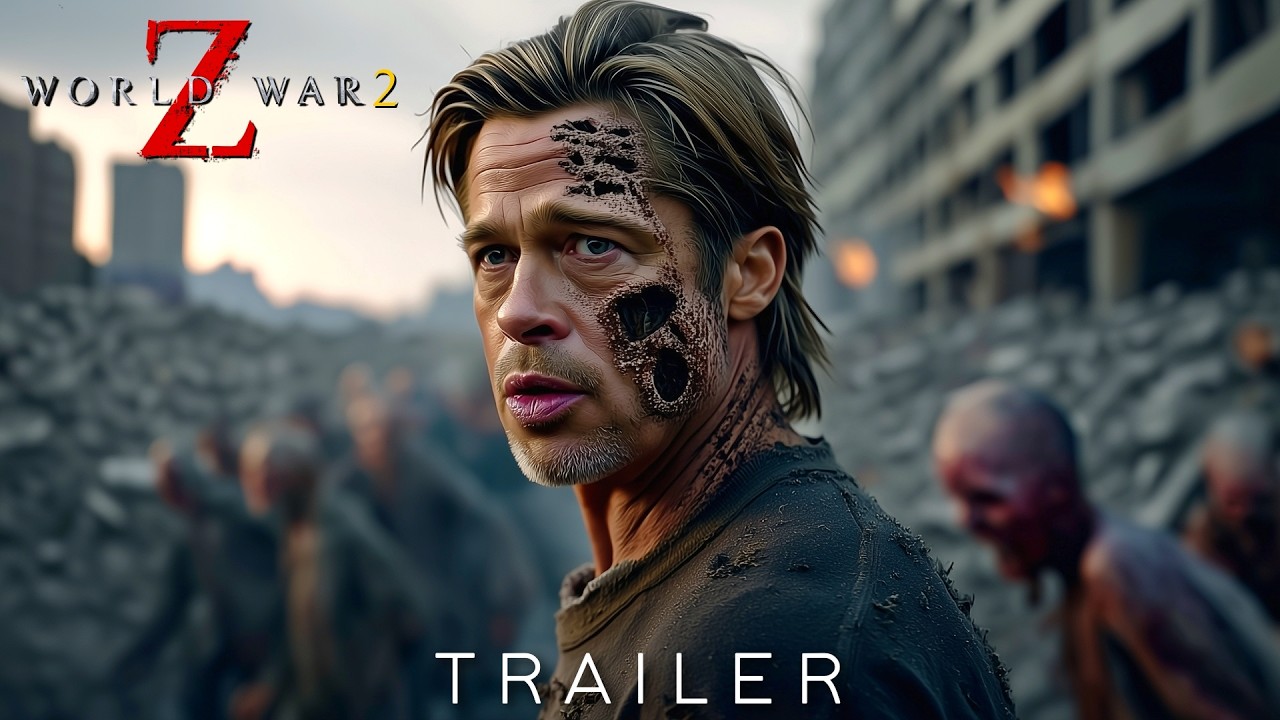
The film picks up years after the events of the first movie. Humanity has fortified cities, built routines, and learned to survive — but survival is not the same as safety. The virus has evolved, producing faster and frighteningly coordinated undead swarms. Gerry Lane returns to the forefront of the crisis, reluctantly drawn back into a world he hoped he had left behind. He is joined by a hardened ex–special forces leader, played by Jason Statham, who has become a symbol of resilience among survivor strongholds.

The tagline sets the tone: Humanity must fight back or risk becoming the next meal. The narrative follows the pair across devastated continents, from broken megacities to stark frozen landscapes, chasing whispers of a hidden cure that could end the conflict or unleash irreversible consequences. The film moves with breathless momentum, constantly placing its characters at the edge of collapse without tipping into mindless chaos.

Performances
Brad Pitt grounds the film with weary gravitas. His portrayal of Gerry Lane carries the weight of memory — the sense of a man who has seen too much but understands that responsibility does not dissolve with exhaustion. Jason Statham brings a different energy: controlled, disciplined, and intensely focused. The contrast between them becomes one of the film’s strengths. Their chemistry is not based on quips, but on mutual recognition of what is at stake.
The supporting cast contributes effectively, portraying communities clinging to hope in the face of mounting fear. Rather than caricatures, they feel like people who have adapted in believable and sometimes heartbreaking ways.
Direction and Action
The direction is muscular and confident, embracing large-scale set pieces while maintaining spatial clarity. The film revisits the franchise’s signature imagery of overwhelming swarms but reframes it through the evolution of the threat. The pacing is brisk without feeling rushed, balancing large action sequences with quieter passages that let tension simmer.
Action here is designed to be thrilling rather than gratuitous. The camera resists lingering on brutality and instead focuses on movement, strategy, and the overwhelming pressure of survival. This makes the film accessible while still delivering adrenaline-charged sequences fans expect.
World-Building and Visual Design
One of the pleasures of World War Z Part 2 is its expanded sense of geography. The film traverses fortified urban centers, snowbound wastelands, and collapsed infrastructure, each rendered with convincing detail. The production design communicates how societies bend without fully breaking. Small touches — makeshift markets, repurposed stadiums, improvised communication hubs — give the world texture.
Visual effects enhance rather than dominate. The evolved undead are depicted with alarming speed and coordination, but without gratuitous graphic detail. The result is frightening because of implication and momentum rather than shock value.
Sound and Score
The sound design amplifies unease: distant alarms, rushing wind through empty structures, and rhythmic, pounding movement of approaching hordes. The score reinforces the film’s themes of resilience and accelerating danger, swelling during moments of moral decision as much as during action.
Themes
Beneath the spectacle lies an exploration of adaptation. The virus evolves, and the film asks whether humanity can evolve ethically and cooperatively in response. Cooperation versus isolation, science versus fear, and endurance versus compassion form a thematic backbone. The film suggests that heroism is not loud bravado, but the quiet insistence on protecting others even when the future is uncertain.
What Fans Can Expect
- High-intensity action sequences driven by momentum and stakes
- A dynamic pairing of Brad Pitt and Jason Statham
- Expanded global settings and varied survival communities
- A focus on coordinated, faster threats that heighten tension
- A balance between spectacle and human emotion
Critique
Some sequences move so quickly that character beats risk being overshadowed, and viewers who prefer intimate storytelling over sprawling action may find the scale overwhelming. Yet even in its most bombastic moments, the film keeps returning to human faces, restoring emotional clarity. The narrative occasionally leans on familiar dystopian tropes, but strong performances elevate them beyond cliché.
SEO Keywords to Note
- World War Z Part 2 review
- World War Z sequel
- Brad Pitt and Jason Statham movie
- zombie apocalypse thriller
- post-apocalyptic action film
Final Verdict
World War Z Part 2 is a confident and relentless sequel that understands the appeal of the original while pushing its ideas further. It delivers urgency, large-scale action, and a surprisingly reflective core. More than simple survival spectacle, it is about responsibility in the face of a changing threat. Fans of the first film will find much to enjoy, and newcomers will encounter a gripping, accessible entry point into the franchise.
In the end, the film leaves us with an observation that resonates beyond genre cinema: the world may change faster than we expect, but how we respond to each other determines whether we merely endure or truly live.