
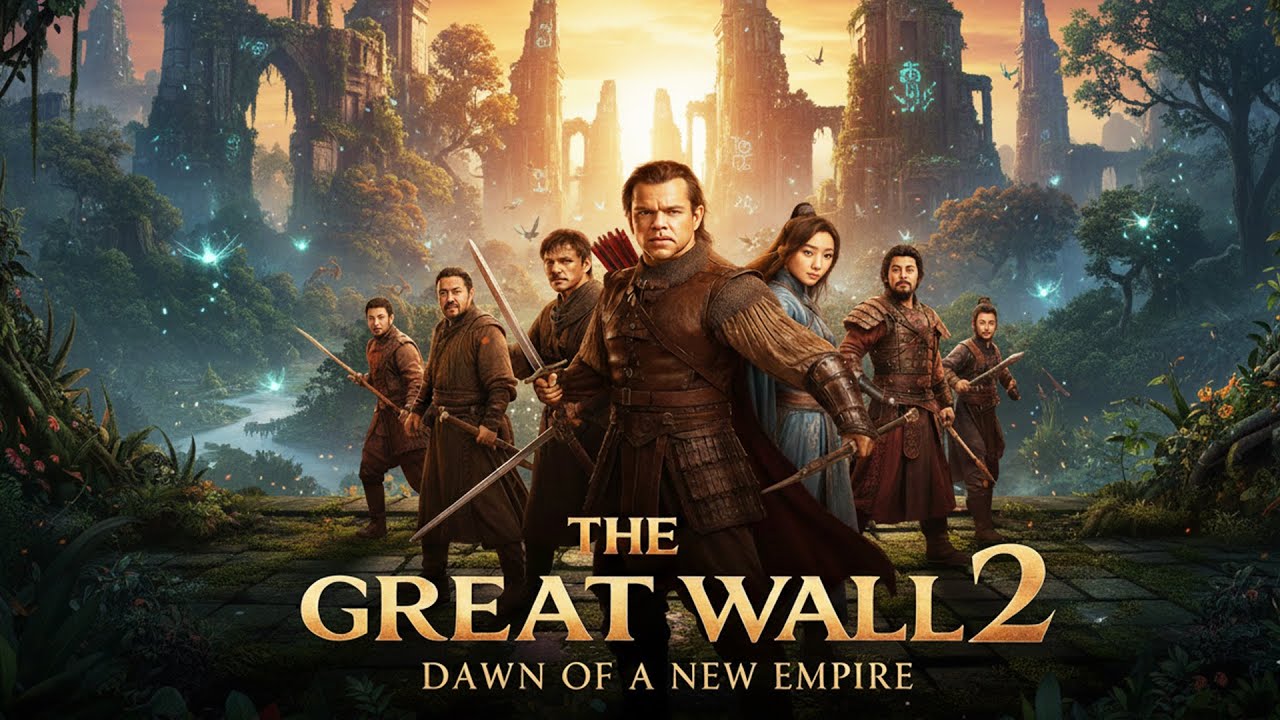
Introduction
Some sequels exist merely to remind us of a brand. The Great Wall 2: Legacy of Fire exists to argue with history, to take a polarizing original and answer it not with apology, but with conviction. This is a louder, more confident film that understands what audiences wanted the first time: myth with muscle, spectacle with stakes, and fantasy that feels anchored to human courage.

Plot Overview (No Spoilers)
Set years after the first great defense of the Wall, the sequel opens in a China that believes the ancient threat has finally been buried beneath stone and memory. That belief proves dangerously optimistic. A new strain of monstrous forces emerges, more intelligent and more ruthless, capable not only of brute assault but strategic warfare.

Veteran defenders and new warriors must unite, blending traditional battle doctrine with unfamiliar powers unearthed from the Wall’s hidden depths. The story moves with urgency, never lingering too long on exposition, and wisely frames its conflict as both external and internal: how does one defend a world that no longer believes it needs saving?

Performances That Anchor the Spectacle
- Matt Damon returns with a quieter, more weathered presence. His performance leans into restraint, portraying a warrior shaped as much by regret as by skill.
- Jing Tian delivers the film’s emotional backbone. Her character balances authority and vulnerability, embodying leadership forged through sacrifice rather than destiny.
- Andy Lau is a welcome and commanding addition, bringing gravitas and moral tension. His scenes suggest decades of unspoken history, and the film is smarter whenever it lets him speak.
Together, the cast elevates material that could have collapsed under its own scale. These are not just figures on battlements; they are people making decisions that cost lives.
Direction and Visual World-Building
Visually, Legacy of Fire is astonishing. The Wall itself feels alive, scarred by past battles and hiding secrets within its stone arteries. The cinematography favors clarity over chaos, allowing the audience to understand geography even in massive siege sequences.
The film’s color palette shifts deliberately, moving from cold stone blues to violent embers of red and gold as the conflict escalates. This visual language reinforces the title’s promise: fire is not just destruction here, but transformation.
Action, Choreography, and Scale
The action sequences are relentless but not numbing. Battles unfold in phases, each with its own tactical logic. Aerial combat is staged with surprising elegance, while ground skirmishes emphasize coordination and sacrifice rather than invincibility.
Importantly, the film understands rhythm. Quiet moments are placed just long enough for the weight of loss to register before the next clash erupts. This is blockbuster filmmaking that respects pacing as much as power.
Themes Beneath the Armor
At its core, The Great Wall 2 is about legacy. What do we inherit from those who fought before us, and what do we distort in the retelling? The film explores the danger of complacency, the cost of mythologizing victory, and the necessity of unity in the face of evolving threats.
Honor here is not portrayed as rigid tradition, but as a living principle that must adapt or perish. It is a surprisingly thoughtful message embedded within a fantasy epic.
Final Verdict
The Great Wall 2: Legacy of Fire succeeds because it knows exactly what kind of movie it wants to be. It does not chase realism, nor does it drown in excess. Instead, it embraces the operatic nature of myth while grounding its spectacle in human resolve.
This is a sequel that improves upon its predecessor in nearly every way: sharper storytelling, stronger performances, and action that thrills without empty noise. Like the Wall itself, the film stands tall not because it is flawless, but because it endures.