



An Atmosphere Thick With Memory
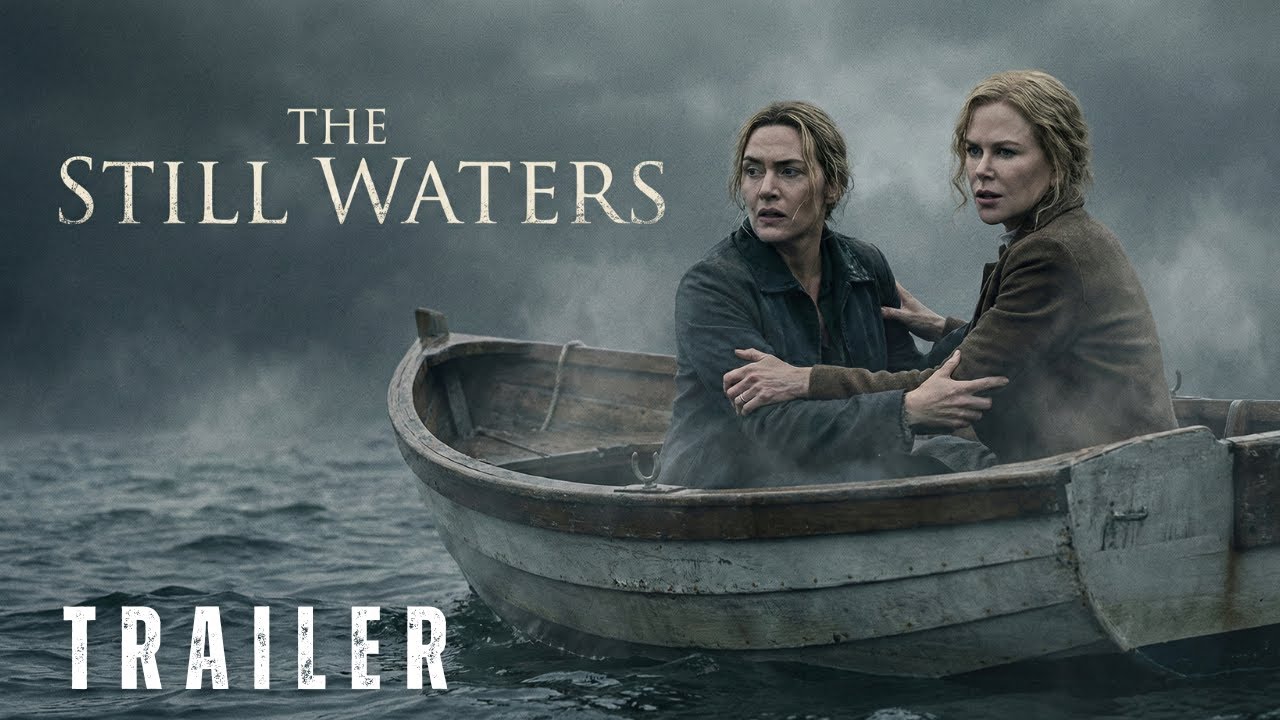
There is a particular kind of chill that seeps in not from what a film shows, but from what it refuses to say. The Still Waters understands this instinctively. Set in a remote coastal town where the ocean seems less a source of life than a keeper of secrets, the film opens with stillness so complete it feels curated. This is not a place untouched by violence, but one that has learned to live politely beside it.

Director and screenwriter treat silence as a moral condition, not just an aesthetic choice. Every foggy shoreline and waterlogged pier feels weighted with memory, as though the town itself were holding its breath. When evidence of a decades-old crime surfaces from beneath the waterline, the effect is not explosive but corrosive. The truth does not arrive with a bang. It leaks.

Performances That Speak Without Shouting
At the center of the film are two women bound by a shared past neither can fully name aloud. Kate Winslet delivers a performance of remarkable restraint, playing a woman whose face seems permanently set against the possibility of confession. Winslet has always been an actor of emotional precision, and here she uses stillness as her sharpest tool. A glance held a second too long tells us more than pages of dialogue ever could.

Opposite her, Nicole Kidman brings a brittle intensity that suggests a life held together by routine rather than peace. Kidman excels at portraying women who appear composed until the cracks become impossible to ignore. In The Still Waters, those cracks are not dramatic fissures but hairline fractures, spreading quietly until the entire structure is compromised.
Supporting performances deepen the film’s moral complexity:
- Brian Cox embodies institutional authority with weary menace, suggesting a man who has mistaken order for justice.
- Jessie Buckley injects raw vulnerability into the story, representing a generation forced to inherit consequences it did not create.
A Psychological Thriller That Resists Easy Answers
What distinguishes The Still Waters from lesser psychological thrillers is its refusal to offer catharsis on demand. The investigation at the heart of the story is not a puzzle box designed for clever resolution. Instead, it functions as a slow excavation of guilt, complicity, and the social agreements that allow wrongdoing to calcify into history.
The screenplay understands that communities protect themselves the same way individuals do: through denial, rationalization, and selective memory. As alliances shift and old loyalties are tested, the film asks an uncomfortable question. Is silence an act of survival, or is it simply another form of violence?
Pacing That Mirrors Emotional Pressure
Meticulously paced, the film allows tension to accumulate rather than spike. Scenes linger just long enough to make us uneasy, trusting the audience to sit with discomfort. This patience pays off. By the time the narrative tightens its grip, the pressure feels earned, not manufactured.
Visual Storytelling Beneath the Surface
The cinematography deserves special mention. Water is everywhere, but it is never merely decorative. Reflections distort faces, tides erase footprints, and submerged objects hint at histories we are not yet allowed to see. The visual language reinforces the film’s central idea: the past is not gone, it is simply waiting.
Muted color palettes and natural light ground the film in realism, while subtle shifts in framing mirror the characters’ internal states. The camera does not judge, but it does not look away either.
The Cost of Protecting Secrets
Ultimately, The Still Waters is less concerned with who committed the crime than with who allowed it to disappear. The film explores accountability not as a legal concept, but as a moral reckoning. Protecting a secret may preserve peace in the short term, but the bill always comes due.
There are no easy heroes here, only people making impossible choices and living with the consequences. That honesty is what gives the film its haunting power.
Final Verdict
The Still Waters is an atmospheric, emotionally charged psychological thriller that trusts its audience to think and feel deeply. Anchored by exceptional performances and guided by a steady, confident hand, it lingers long after the final frame. This is a film about silence, yes, but more importantly, about what happens when silence finally breaks.
In a genre often crowded with noise, The Still Waters reminds us that sometimes the quietest stories are the ones that echo the longest.